3-Day Osaka Itinerary: Best Things to Do
Osaka is Japan's boisterous second city and its self-proclaimed food capital, a place where locals live by the motto kuidaore — "eat until you drop." This busy three-day itinerary clusters each day tightly: the moated Osaka Castle, elegant Nakanoshima island, and the Umeda skyscrapers of the Kita district on day one; the neon canal of Dotonbori, Namba's street-food markets, and retro Shinsekai on day two; and the ancient temples of Tennoji flowing down to the Osaka Bay waterfront on day three. Real okonomiyaki, kushikatsu and takoyaki counters are threaded between the sights, and every stop is scheduled inside its regular opening hours and linked by the city's dense subway network.
✅ Complete your trip to Osaka
Book the essentials and keep this itinerary handy on the road.
Osaka Castle, Nakanoshima & the Kita Skyline
-
🍽️
45mBrooklyn Roasting Company Kitahama 🍴 Food8:00 AM – 8:45 AM📍 Kitahama, Chuo-ku, OsakaA New York-style specialty roaster on the Tosabori riverbank in Kitahama, open from 8am for riverside morning coffee and pastries.

-
🚶
8:48 AM – 8:55 AM· Walk to Osaka City Central Public Hall ·0.6 km ·7m
-
📍
35mOsaka City Central Public Hall 🏛️ Landmark8:55 AM – 9:30 AM📍 Nakanoshima, Kita-ku, OsakaA 1918 red-brick and granite neo-Renaissance hall on Nakanoshima island, one of Osaka's most beloved pieces of Taisho-era architecture.

-
🚗
9:49 AM – 9:55 AM· Travel to Osaka Castle ·2.1 km ·6m
-
📍
1h 35mOsaka Castle 🏛️ Landmark9:55 AM – 11:30 AM📍 Osaka Castle Park, Chuo-ku, OsakaToyotomi Hideyoshi's castle rises on massive stone ramparts above a moat and sprawling park; the reconstructed main keep opens at 9:00.

-
🚶
11:36 AM – 11:45 AM· Walk to Osaka Museum of History ·0.7 km ·9m
-
📍
45mOsaka Museum of History 🖼️ Museum11:45 AM – 12:30 PM📍 Otemae, Chuo-ku, OsakaTen themed floors trace 1,400 years of Osaka, from the ancient Naniwa Palace to the modern city, with sweeping castle views; closed Tuesdays.

-
🚗
12:42 PM – 12:50 PM· Travel to Okonomiyaki Yukari Sonezaki Honten ·2.8 km ·8m
-
🍽️
1h 10mOkonomiyaki Yukari Sonezaki Honten 🍴 Food12:50 PM – 2:00 PM📍 Sonezaki, Kita-ku, OsakaA Sonezaki institution since 1950, grilling Osaka's signature okonomiyaki savory pancakes on teppan griddles.

-
🚶
2:15 PM – 2:20 PM· Walk to Tsuyunoten Shrine (Ohatsu Tenjin) ·0.2 km ·5m
-
📍
30mTsuyunoten Shrine (Ohatsu Tenjin) ⛪ Religious site2:20 PM – 2:50 PM📍 Sonezaki, Kita-ku, OsakaA 1,300-year-old shrine tucked among Umeda's high-rises, famous as the setting of Chikamatsu's tragic love play and a spot for matchmaking prayers.
-
🚶
3:08 PM – 3:15 PM· Walk to HEP FIVE Ferris Wheel ·0.6 km ·7m
-
📍
40mHEP FIVE Ferris Wheel 🎭 Entertainment3:15 PM – 3:55 PM📍 Kakuda-cho, Kita-ku, OsakaA bright red Ferris wheel rising 106 meters from the roof of the HEP FIVE mall for a 15-minute loop over the Umeda skyline.

-
🚶
4:18 PM – 4:30 PM· Walk to Umeda Sky Building Kuchu Teien Observatory ·0.9 km ·12m
-
📍
1h 25mUmeda Sky Building Kuchu Teien Observatory 🌄 Viewpoint4:30 PM – 5:55 PM📍 Oyodonaka, Kita-ku, OsakaTwin 173-meter towers joined by a rooftop 'Floating Garden' observatory offering 360-degree views across the whole of Osaka.

-
🚶
6:51 PM – 7:00 PM· Walk to Ganko Umeda Honten ·0.7 km ·9m
-
🍽️
1h 30mGanko Umeda Honten 🍴 Food7:00 PM – 8:30 PM📍 Shibata, Kita-ku, OsakaThe flagship of Osaka's Ganko group near Umeda Station, serving sushi and seasonal Japanese kaiseki with English menus.

Minami: Dotonbori, Namba & Retro Shinsekai
-
🍽️
45mMarufuku Coffee Sennichimae Honten 🍴 Food8:00 AM – 8:45 AM📍 Sennichimae, Chuo-ku, OsakaA retro Showa-era kissaten near Namba, open from 8am for its signature dark-roast drip coffee and thick-cut toast.

-
🚶
8:55 AM – 9:00 AM· Walk to Kuromon Ichiba Market ·0.3 km ·5m
-
📍
1hKuromon Ichiba Market 🛍️ Shopping9:00 AM – 10:00 AM📍 Nipponbashi, Chuo-ku, OsakaA 580-meter covered market known as 'Osaka's Kitchen,' packed with fresh seafood, fruit and street-food stalls that open from around 9am.

-
🚶
10:22 AM – 10:30 AM· Walk to Dotonbori & the Glico Sign ·0.6 km ·8m
-
📍
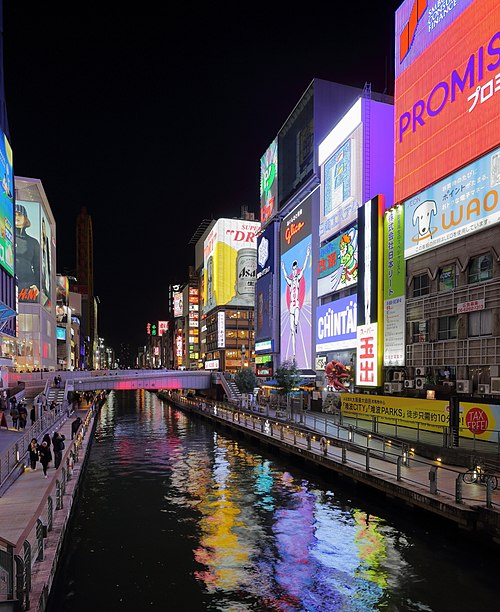
45mDotonbori & the Glico Sign 🏛️ Landmark10:30 AM – 11:15 AM📍 Dotonbori, Chuo-ku, OsakaOsaka's neon-lit, canal-side entertainment strip, anchored by the running-man Glico billboard above Ebisubashi Bridge.
-
🚶
11:25 AM – 11:30 AM· Walk to Hozenji Temple & Hozenji Yokocho ·0.1 km ·5m
-
📍
30mHozenji Temple & Hozenji Yokocho ⛪ Religious site11:30 AM – 12:00 PM📍 Namba, Chuo-ku, OsakaA tiny moss-covered Fudo Myoo statue that worshippers douse with water, hidden on a lantern-lit cobblestone alley just off Dotonbori.
-
🚶
12:10 PM – 12:15 PM· Walk to Okonomiyaki Mizuno ·0.1 km ·5m
-
🍽️
1h 15mOkonomiyaki Mizuno 🍴 Food12:15 PM – 1:30 PM📍 Dotonbori, Chuo-ku, OsakaA Michelin Bib Gourmand okonomiyaki shop on Dotonbori, grilling its famous yamaimo mountain-yam batter pancakes since 1945.
-
🚶
1:37 PM – 1:45 PM· Walk to Amerikamura ·0.6 km ·8m
-
📍
1hAmerikamura 🛍️ Shopping1:45 PM – 2:45 PM📍 Nishi-Shinsaibashi, Chuo-ku, OsakaOsaka's youth-culture district of vintage shops, streetwear boutiques and the landmark Triangle Park, just west of Shinsaibashi.

-
🚗
3:08 PM – 3:15 PM· Travel to Tsutenkaku Tower ·2.3 km ·7m
-
📍
50mTsutenkaku Tower 🌄 Viewpoint3:15 PM – 4:05 PM📍 Ebisu-Higashi, Naniwa-ku, OsakaThe 103-meter retro tower crowning the old-school Shinsekai district, with an observation deck and the lucky Billiken statue.

-
🚶
4:15 PM – 4:20 PM· Walk to Shinsekai & Janjan Yokocho ·0.1 km ·5m
-
📍
50mShinsekai & Janjan Yokocho 🏛️ Landmark4:20 PM – 5:10 PM📍 Ebisu-Higashi, Naniwa-ku, OsakaA gloriously retro 'New World' neighborhood of glowing signboards, kushikatsu joints and the narrow Janjan Yokocho arcade.

-
🚶
6:55 PM – 7:00 PM· Walk to Kushikatsu Daruma Shinsekai Sohonten ·0.1 km ·5m
-
🍽️
1h 30mKushikatsu Daruma Shinsekai Sohonten 🍴 Food7:00 PM – 8:30 PM📍 Ebisu-Higashi, Naniwa-ku, OsakaThe 1929 birthplace of Osaka kushikatsu deep-fried skewers, at the foot of Tsutenkaku, with its strict no-double-dipping sauce rule.
Shitennoji, Tennoji Heights & the Osaka Bay
-
🍽️
45mDoutor Coffee Tennoji Kitaguchi 🍴 Food8:00 AM – 8:45 AM📍 Horikoshi-cho, Tennoji-ku, OsakaA dependable coffee shop at Tennoji Station's north exit, open from 7:30am for drip coffee and morning-set toast before a day of temples and towers.

-
🚶
8:52 AM – 9:00 AM· Walk to Shitennoji Temple ·0.6 km ·8m
-
📍
1hShitennoji Temple ⛪ Religious site9:00 AM – 10:00 AM📍 Shitennoji, Tennoji-ku, OsakaJapan's first state-built Buddhist temple, founded in 593 by Prince Shotoku, with a five-story pagoda and the serene Gokuraku-jodo garden.

-
🚶
10:06 AM – 10:15 AM· Walk to Keitakuen Garden ·0.7 km ·9m
-
📍
45mKeitakuen Garden 🌳 Park10:15 AM – 11:00 AM📍 Tennoji Park, Tennoji-ku, OsakaA Meiji-era circular strolling garden with a central pond, once owned by the Sumitomo family, at the edge of Tennoji Park; closed Mondays.

-
🚶
11:08 AM – 11:15 AM· Walk to Abeno Harukas 300 Observatory ·0.5 km ·7m
-
📍
1h 15mAbeno Harukas 300 Observatory 🌄 Viewpoint11:15 AM – 12:30 PM📍 Abenosuji, Abeno-ku, OsakaThe observation deck atop one of Japan's tallest skyscrapers offers a 300-meter, three-story glass panorama over Osaka and out toward Kobe.

-
🚶
12:30 PM – 12:35 PM· Walk to Abeno Takoyaki Yamachan 2-goten ·0.1 km ·5m
-
🍽️
55mAbeno Takoyaki Yamachan 2-goten 🍴 Food12:35 PM – 1:30 PM📍 Matsuzaki-cho, Abeno-ku, OsakaThe sit-down second shop of Michelin Bib Gourmand takoyaki maker Yamachan, steps behind Abeno Harukas, serving octopus balls rich enough to eat without sauce.
-
🚗
1:51 PM – 2:15 PM· Travel to Osaka Aquarium Kaiyukan ·7.9 km ·24m
-
📍
2h 30mOsaka Aquarium Kaiyukan 🎭 Entertainment2:15 PM – 4:45 PM📍 Kaigandori, Minato-ku, OsakaOne of the world's largest aquariums, built around a giant central Pacific Ocean tank home to whale sharks, on the Tempozan waterfront.

-
🚶
4:55 PM – 5:00 PM· Walk to Tempozan Marketplace ·0.2 km ·5m
-
📍
40mTempozan Marketplace 🛍️ Shopping5:00 PM – 5:40 PM📍 Kaigandori, Minato-ku, OsakaA waterfront mall beside the aquarium with shops and the retro 'Naniwa Kuishinbo Yokocho' food alley recreating 1960s Osaka.

-
🚶
5:40 PM – 5:45 PM· Walk to Tempozan Giant Ferris Wheel ·0.1 km ·5m
-
📍
30mTempozan Giant Ferris Wheel 🌄 Viewpoint5:45 PM – 6:15 PM📍 Kaigandori, Minato-ku, OsakaA 112.5-meter Ferris wheel over Osaka Bay with color-lit gondolas and views toward Awaji Island and the Akashi-Kaikyo Bridge.
-
🚗
6:40 PM – 7:00 PM· Travel to Kani Doraku Dotonbori Honten ·6.6 km ·20m
-
🍽️
1h 30mKani Doraku Dotonbori Honten 🍴 Food7:00 PM – 8:30 PM📍 Dotonbori, Chuo-ku, OsakaThe original Dotonbori branch of Kani Doraku, marked by its giant animated crab sign, serving crab hotpot and full crab courses.
🏨 Where to stay
Real, vetted stays near your route — check the reviews, then book.
Frequently asked questions
How many days do you need in Osaka?
3 days are a great amount of time to explore Osaka. This itinerary covers 18 sights and 9 food & drink stops across 3 days, giving you a thorough introduction to the city and Kansai.
What are the best things to do in Osaka?
Some of the best things to do in Osaka include Osaka City Central Public Hall, Osaka Castle, Osaka Museum of History. Osaka is Japan's boisterous second city and its self-proclaimed food capital, a place where locals live by the motto kuidaore — "eat until you drop." This busy three-day itinerary clusters each day tightly: the moated Osaka Castle, elegant Nakanoshima island, and the Umeda skyscrapers of the Kita district on day one; the neon canal of Dotonbori, Namba's street-food markets, and retro Shinsekai on day two; and the ancient temples of Tennoji flowing down to the Osaka Bay waterfront on day three. Real okonomiyaki, kushikatsu and takoyaki counters are threaded between the sights, and every stop is scheduled inside its regular opening hours and linked by the city's dense subway network.
Where should I stay in Osaka?
Popular options in Osaka include Super Hotel Namba-Nipponbashi and Cross Hotel Osaka. The Kansai area also has a range of hotels for every budget — book in advance for the best rates.
What's the best time to visit Osaka?
Much of this itinerary is indoors — 6 of its 18 sights are museums, entertainment venues, or shopping stops — so Osaka holds up outside peak season too. Book the popular indoor attractions ahead in busy months, and check the seasonal climate for Japan before you go.